
Allow an hour to an hour and a half to discover a few collections on a first visit. The permanent collections are free and the museum usually opens Tuesday to Sunday, 10am to 5pm. You can visit between Brandon Hill and Clifton. The British and World Wildlife galleries are closed for redevelopment until summer 2027.
Choose your route through the museum
Bristol Museum & Art Gallery brings several collections together in one building. There is no need to try to see them all before continuing to Clifton. Choose what appeals instead: Egypt and discoveries with children, paintings and art objects for a quiet visit, or the ground floor for a short stop.
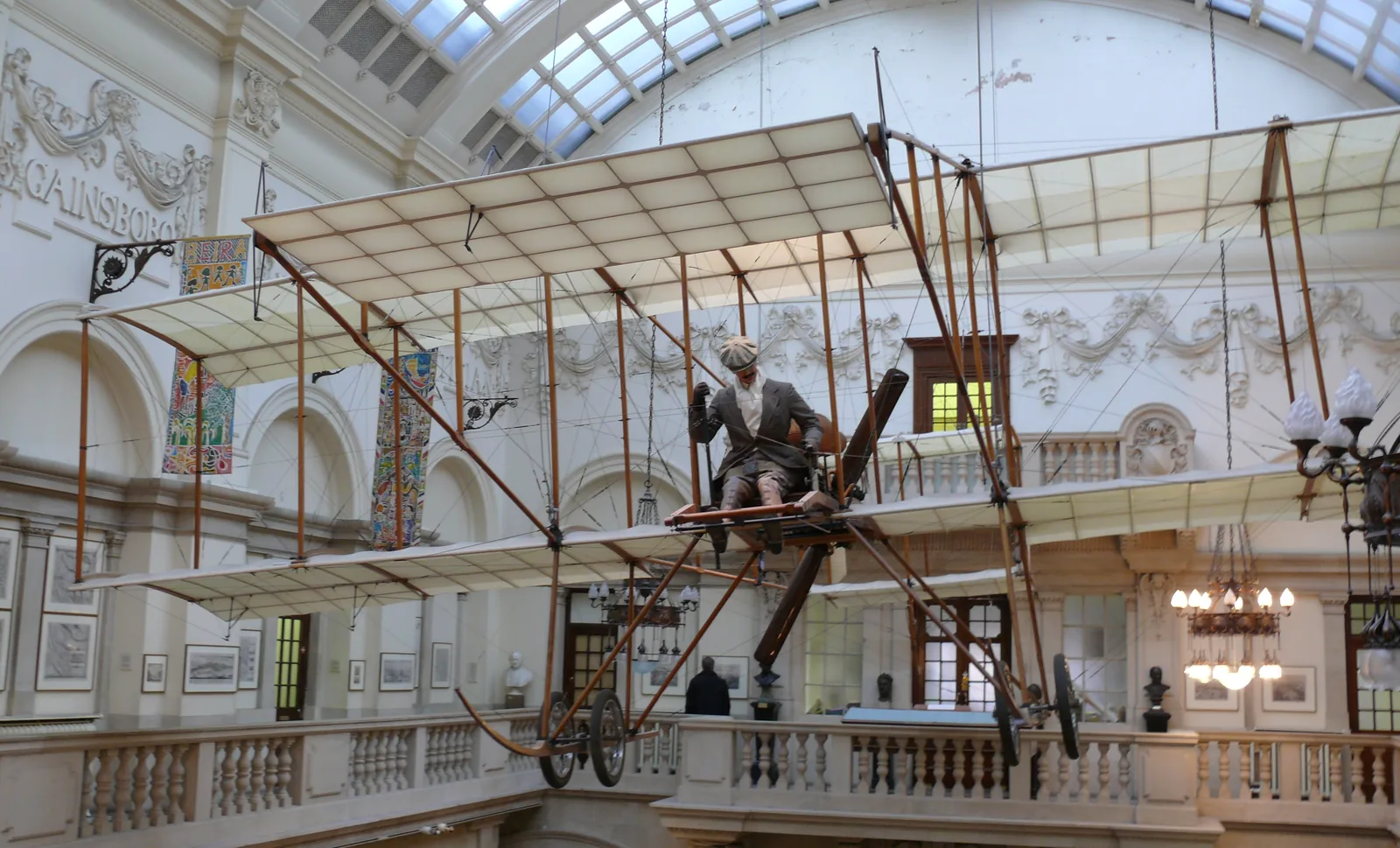
In the hall, start by looking up: the Bristol Boxkite is suspended above visitors. The building itself, its stairs and sightlines are part of the visit; this large space also explains why the hall can echo when busy.
| You have… | My suggestion |
|---|---|
| 45 minutes | The hall, Banksy’s Paint Pot Angel and one ground-floor gallery. |
| 1 to 1½ hours | The ground floor, then a choice of geology/dinosaurs or art galleries. |
| 2 hours or more | A selection across several floors, with a break and possibly a temporary exhibition. |
Adapt these timings to your interests. Painting or archaeology enthusiasts may stay much longer. And as the collections are free, you can also make a short visit without trying to justify an expensive ticket.
Ground floor: Banksy, Egypt and the Curiosity area
Paint Pot Angel is a good stop on a street art trip. This Banksy sculpture is seen in a very different context from the works on Stokes Croft’s walls: it forms part of a museum visit, among other objects and stories. Our Banksy route in Bristol helps you link this stop with artworks around the city.
Then continue to the Egyptian and Assyrian collections. Human remains are displayed in some galleries. With young children, it is best to know this before entering; you can also focus on other parts of these collections. The Curiosity area completes the ground floor with archaeological objects and a space for under-fives.
The toddler area closes at 4.30pm, half an hour before the museum. If you arrive at 4.45pm, it will already be closed. Families are therefore better visiting early in the day or early enough in the afternoon, rather than just before closing.
Fossils and geology: what remains accessible during the works
The first-floor galleries devoted to geology, minerals and dinosaurs offer another possible route. They interest visitors who prefer objects and natural sciences to paintings. After the whole floor closed from 6 to 16 October 2026, the museum once again distinguishes these galleries from the wildlife spaces being redeveloped.
Works until summer 2027: the British and World Wildlife galleries are closed. Do not plan your visit around Alfred the gorilla or the Romani wagon displayed there. The museum also warns of possible construction disturbance in the area.
These closures matter most if you are coming for animals. If you prefer art, Egypt or simply want to discover the museum, other rooms await. Pick up a map at reception to choose among open spaces and avoid going up a floor solely for an inaccessible display.
Upstairs: paintings, ceramics and glass
The second floor is a good reason to extend your visit if you enjoy art museums. Its galleries cover several European periods and schools; a selection of Italian and Dutch paintings sits alongside French, British and contemporary works. You do not need to cover everything: one or two rooms are enough for a stop before Clifton.
Decorative art objects provide a more direct link with the region. Ceramics and glass include Bristol delftware and Bristol Blue Glass. They let you examine shapes and techniques, then recognise those references in the city’s shop windows. You will also find ceramics and glass in the Asian collections.
In a three-day itinerary, this floor mainly suits art enthusiasts. Adding an hour of art galleries after a long natural sciences visit can overload the Clifton day. You can also return another day: the free collections lend themselves to several short visits.
Admission, opening hours and exhibitions
The permanent collections are free to access, with an optional donation. Usual hours are Tuesday to Sunday, 10am to 5pm; Mondays are normally closed. Individual visitors do not need to book for the collections. Groups of ten or more follow the museum’s booking arrangements.
Temporary exhibitions have their own conditions and may require a ticket. Check their subject before choosing: you can happily stick to the permanent collections. The official programme brings together exhibitions and any closure information.
Getting there and fitting it into your day
The museum is on Queens Road, at the top of the Park Street area, near university buildings. The walk from College Green and the cathedral is uphill. If coming from Brandon Hill, the museum offers an indoor stop before continuing to Clifton Village and the bridge.
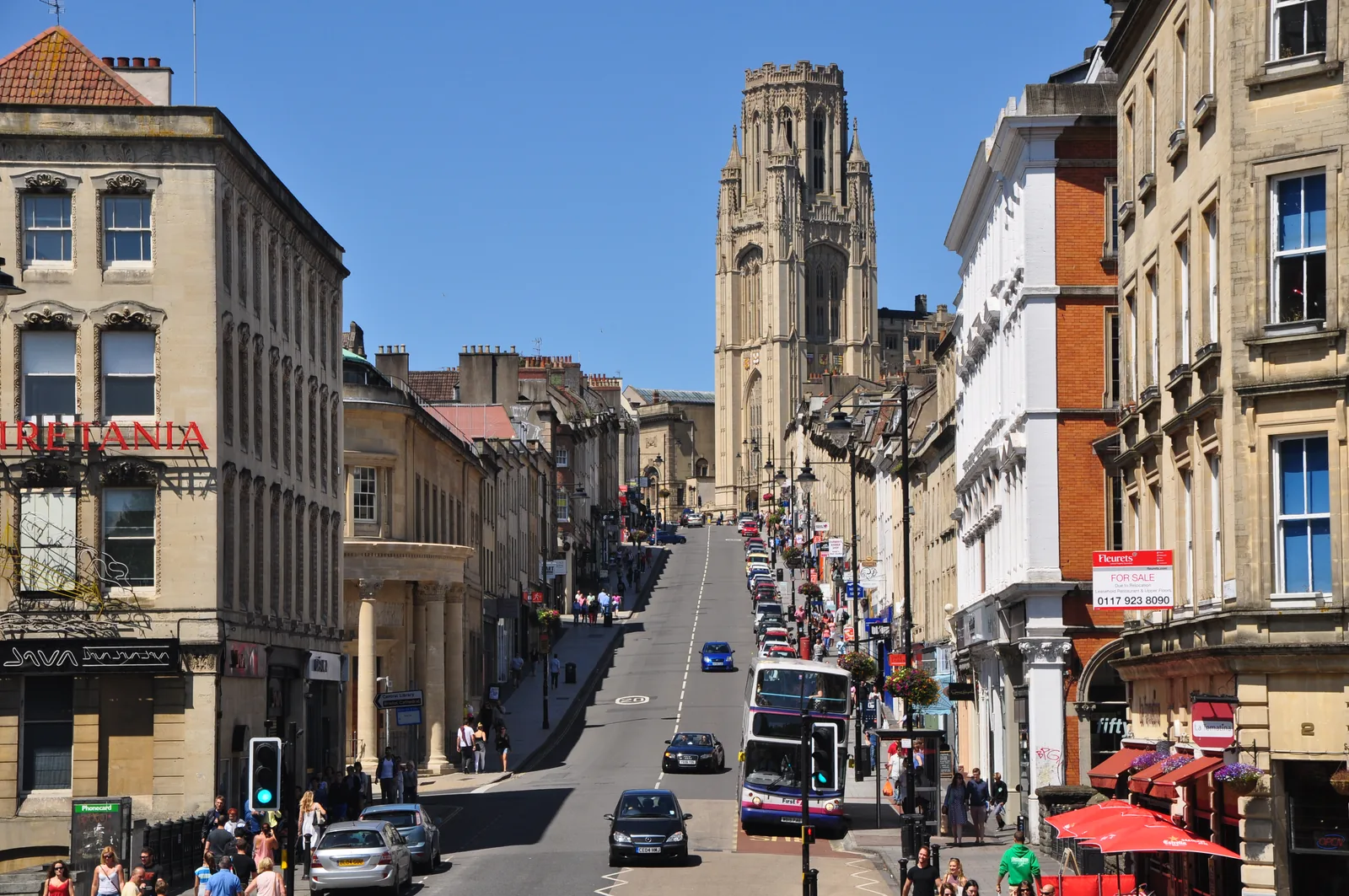
This is the sequence suggested in our second day in Bristol. In rainy weather, you can instead spend longer here and shorten the outdoor walk. If you have only one day in the city, M Shed is more directly on the harbour loop, while Bristol Museum fits the climb towards Clifton.
The Bristol map shows the museum entrance and nearby stops. If you want to avoid the climb from the quays, look at routes serving Queens Road and choose according to where you are staying.
Access, lifts and breaks
A level entrance with automatic doors is to the left of the main entrance. A lift serves public spaces, with a stated exception for Sea Dragons. Wheelchairs can be borrowed and accessible toilets are available; the museum access guide details facilities and the effects of the works.
For a tired child, one collection they enjoy is better than a complete circuit of every floor. Afterwards, take a café break and choose the rest of the day with the Bristol with children and Bristol in the rain guides. They help spread indoor visits over several days rather than doing them all in succession.