
What should you prioritise in Bristol?
For a first visit, I recommend the Old City and quays, Clifton and its bridge, then Stokes Croft for street art. Add one main indoor attraction to suit your interests. SS Great Britain tells of voyages and engineering; M Shed helps explain Bristol’s history; We The Curious particularly suits families who enjoy experiments.
Two days let you see the centre and Clifton. With three days in Bristol, give museums and neighbourhoods more time. On the map, identify attractions close enough to combine in one walk.
Attractions at a glance
| Place or walk | Suggested time | Best for | Budget |
|---|---|---|---|
| Clifton’s bridge and surroundings | 1 to 1½ hours | Landscape and architecture | Free walk |
| SS Great Britain | 2½ to 3 hours | Maritime heritage | £22.00 ≈ €26.28 adult online general admission |
| M Shed | 1 to 1½ hours | Understanding Bristol | Free permanent collections |
| Bristol Museum | 1 to 2 hours | Art, history and collections | Free general admission |
| Street art in Stokes Croft | 1½ to 2 hours | Streets and painted walls | Free independent route |
| We The Curious | Half a day | Hands-on family experiments | Paid; add planetarium depending on the show |
| Old City and St Nicholas Market | 1 to 1½ hours | Historic streets and a lunch break | Independent walk, purchases extra |
Add meal time and travel from your accommodation to these durations. Plans quickly become overloaded with two major paid attractions in the same day.
Clifton Suspension Bridge: Bristol’s landmark view
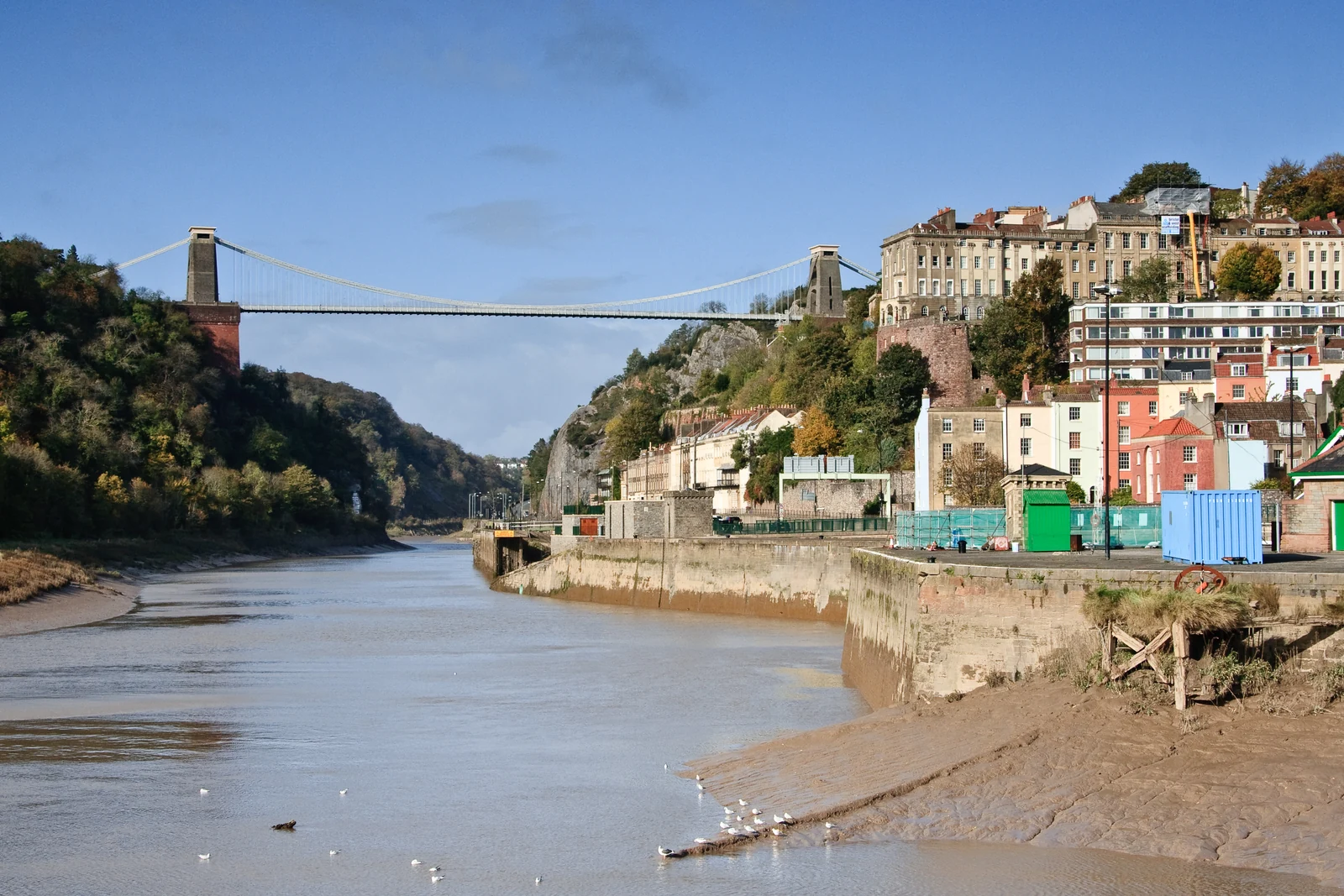
The suspension bridge passes high above the Avon Gorge. Its silhouette alone explains the Clifton detour: the city ends abruptly at a narrow valley, with cliffs, river and hillside houses. Take time to observe the structure from the Clifton side before crossing on foot.
Across the bridge, the museum at Leigh Woods complements the walk. Admission is free. It tells the construction story and explains what you have just crossed; underground tours are a separate, bookable activity.
Combine the bridge with a Clifton Village walk and a break in its shopping streets. From the centre, the terrain is noticeable. A bus out or back is a good way to save energy for viewpoints. In strong wind or persistent rain, move this outing to a better moment of the stay.
The quays and SS Great Britain: a full maritime day
Around Prince Street Bridge, former harbour spaces have become places for walks, museums and going out. Cross to M Shed, follow the cranes and continue to Wapping Wharf. Cargo’s containers gather several lunch places; it is a well-placed break before continuing to the ship.
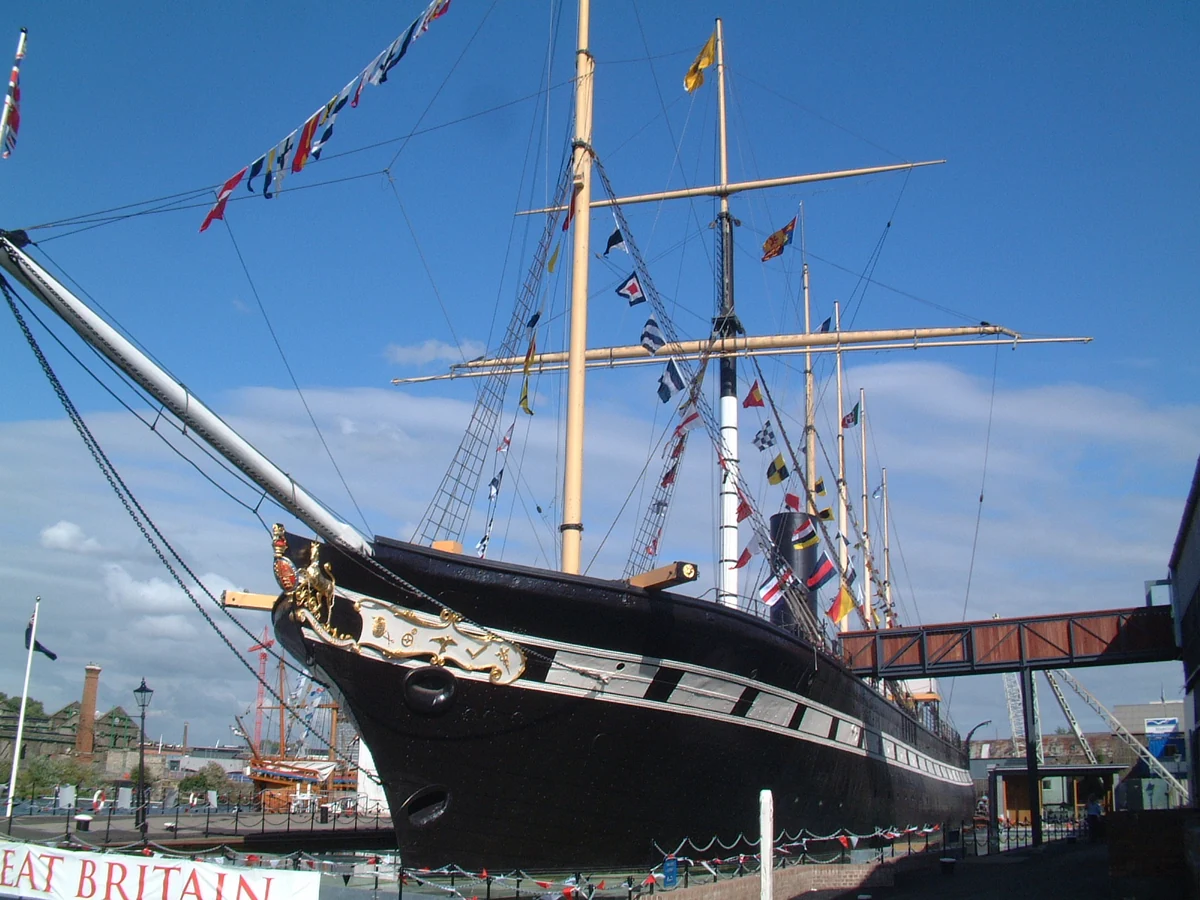
SS Great Britain deserves more than a photo stop. Explore the ship, hull and spaces evoking crossings; Being Brunel museum explores its engineer’s history. If heritage interests you, give it the afternoon. It is the major paid attraction I recommend prioritising to understand Bristol’s connection with the sea.
The site is now also called Bristol Dockyards. SS Great Britain and Bristol Dockyards therefore mean the same site: they are not two separately booked attractions. Online general adult admission is listed at £22.00 ≈ €26.28; some options cost less but also leave less visiting time. Details appear in the visitor guide.
A walk around Harbourside and Wapping Wharf remains pleasant without a ticket. See basins, bridges and quayside activity; however, SS Great Britain’s interiors are not part of a free route.
The ship and museums fill a proper half-day. Choose your date and compare the ticket conditions below with the official ticket office.
St Nicholas Market, King Street and the Old City
Around Corn Street, walk the Old City’s short streets and passages, taking time to look at façades. Then stop at St Nicholas Market for covered-market stalls and small shops, followed by lunch at a counter.
The covered market usually opens Monday to Saturday. On a Sunday, visit the Old City for its streets and buildings, but choose lunch elsewhere. Events and outdoor markets have their own calendars.
King Street extends this exploration south, with pubs and Bristol Old Vic theatre. Then reach Queen Square and the quays. The route thus links the Old City with M Shed.
To discover the neighbourhood’s underground spaces, this guided walk includes St Nicholas Market’s air-raid shelter. It is in English, partly in the streets and partly beneath the market.
Which museum should you choose?
M Shed: get to know the city
In its former waterside shed, M Shed tells Bristol’s story through its people, activities and transformation. I recommend it early in the stay to understand the history of quays and neighbourhoods you will explore. Give it an hour for a first visit, longer if local history interests you. The permanent collections are free.
Bristol Museum, for varied discoveries
Near Park Street, Bristol Museum & Art Gallery brings art, history and natural sciences collections together in a large building. Choose a few spaces rather than trying to see everything. The British and World Wildlife galleries are closed until summer 2027: they should not be your main reason for coming.
Both museums usually open Tuesday to Sunday, 10am to 5pm. Plan other visits on Mondays. Free general admission allows a short visit without feeling you must justify a ticket; some temporary exhibitions remain paid.
We The Curious, for half a day of experiments
At We The Curious, near Millennium Square, take time for hands-on exploration. Allow more time than for simply looking at displays. For families, it is a good alternative to a long rainy walk. For the planetarium, choose your show and check its conditions when adding it to the booking.
To see Concorde, plan an outing to Aerospace Bristol in Filton, outside the centre. The ticket admits you to the museum; travel from Bristol remains to be arranged separately.
Banksy and the street art neighbourhoods
Street art runs through Bristol, but the works are not all five minutes apart. For a first look, start on Nelson Street, then head north to Stokes Croft. Banksy’s The Mild Mild West is seen in Stokes Croft; other artists’ paintings are also part of the neighbourhood’s appeal.
Before setting out to find an artwork, see the Banksy and street art guide: it lists works whose presence is still documented, those moved and those gone. An old photograph is therefore insufficient for planning a detour. Gloucester Road continues far north; our walk covers only its beginning.
South of the harbour, plan another walk in Southville and North Street. If you enjoy observing walls and entering cafés, give them time rather than trying to link every neighbourhood in one walk. A guided tour can help with artwork history and recent changes, provided you check language and starting point.
Brandon Hill and viewpoints
Between the centre and heights, take a break on Brandon Hill. Paths climb through the park with open rooftop views. Cabot Tower is temporarily closed for maintenance. You can walk in the park free but cannot climb the tower.
With little time, I prioritise Clifton’s bridge for landscape and Brandon Hill for a break while crossing the city. They are different experiences, but you need not add every possible viewpoint to appreciate the hills.
St Mary Redcliffe: another great Bristol church
Near Temple Meads, St Mary Redcliffe deserves a detour if you enjoy grand Gothic churches. A guided tour in English accesses usually closed spaces, including the Chatterton Room. Reaching it involves climbing 75 steps. The guided tour is separate from an independent church visit.
If you want a guide for this visit, the following tour lasts around an hour and a half.
How long should you spend in Bristol?
- One day: a compact plan between Clifton and the quays, with a clear sightseeing choice. Follow Bristol in one day instead of picking from too long a list.
- Two days: Old City and harbour on one, Clifton and hills on the other. The weekend itinerary leaves room for street art without piling everything in.
- Three days: add a proper creative-neighbourhood walk or more museum time. It is the most comfortable format for a varied first discovery.
Arrival and departure days are not always sightseeing days. A late-afternoon arrival mainly leaves time for the airport journey, settling in and an evening near your accommodation.
Practical choices that change your stay
Your base: choose the centre or Harbourside for easy quays access. Clifton suits those who enjoy its atmosphere and accept hilly journeys. Compare areas in where to stay in Bristol before choosing a hotel.
Budget: enjoy lovely free days among permanent museum collections, parks and walks. Add accommodation, meals and major attractions that interest you. The budget guide helps calculate spending per person and for the whole stay.
Weather: with a few showers, alternate neighbourhood walks and a nearby museum. In persistent rain, the indoor itinerary avoids crossing the whole city between visits.
To find your way during the trip, open the Bristol map: places and routes are gathered there, with a list for quickly finding the relevant guide.
Routes on the map
Stops along the walk
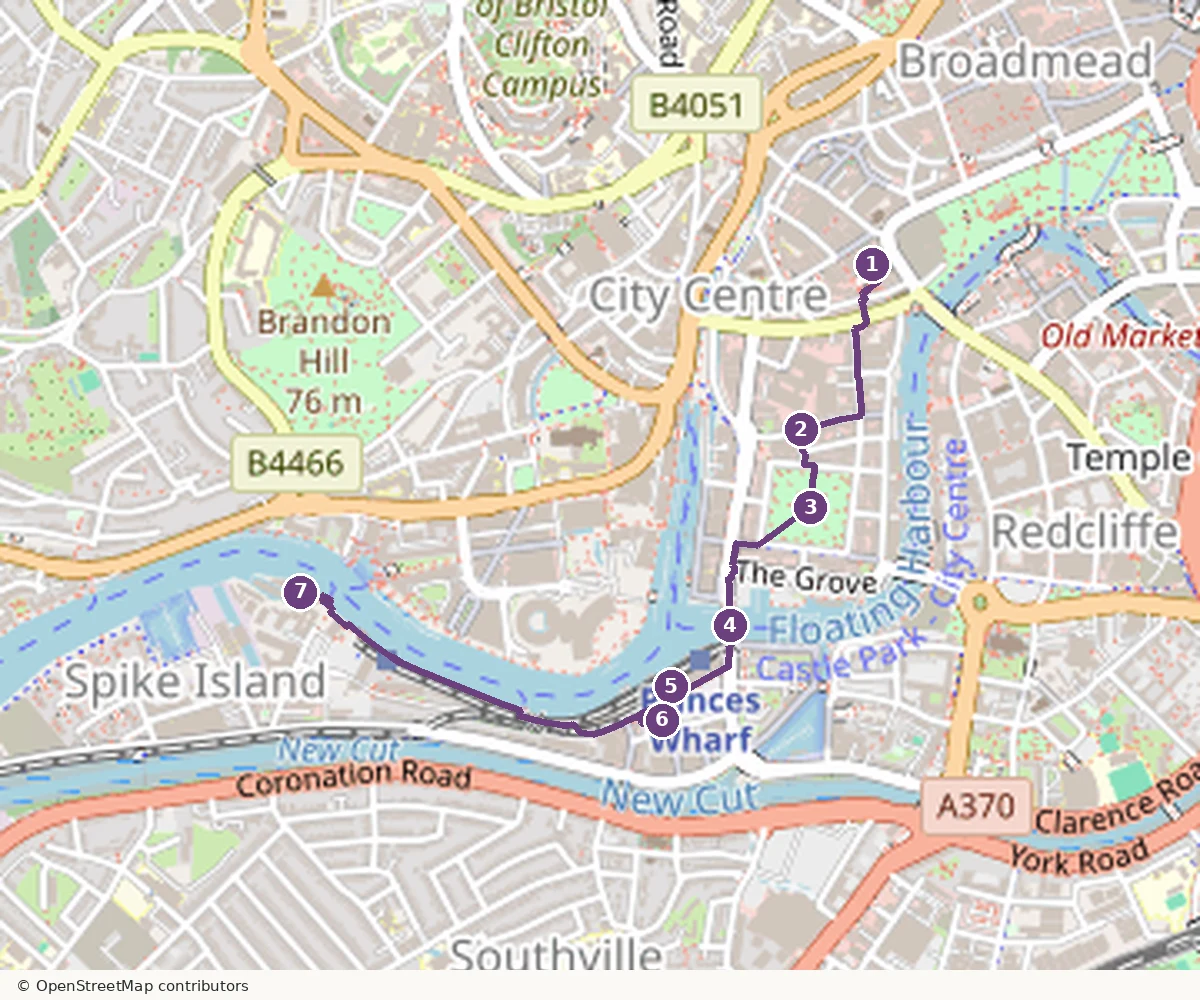
- St Nicholas Market
- King Street
- Queen Square
- Prince Street Bridge
- M Shed
- Wapping Wharf
- SS Great Britain
© OpenStreetMap contributors
Stops along the walk
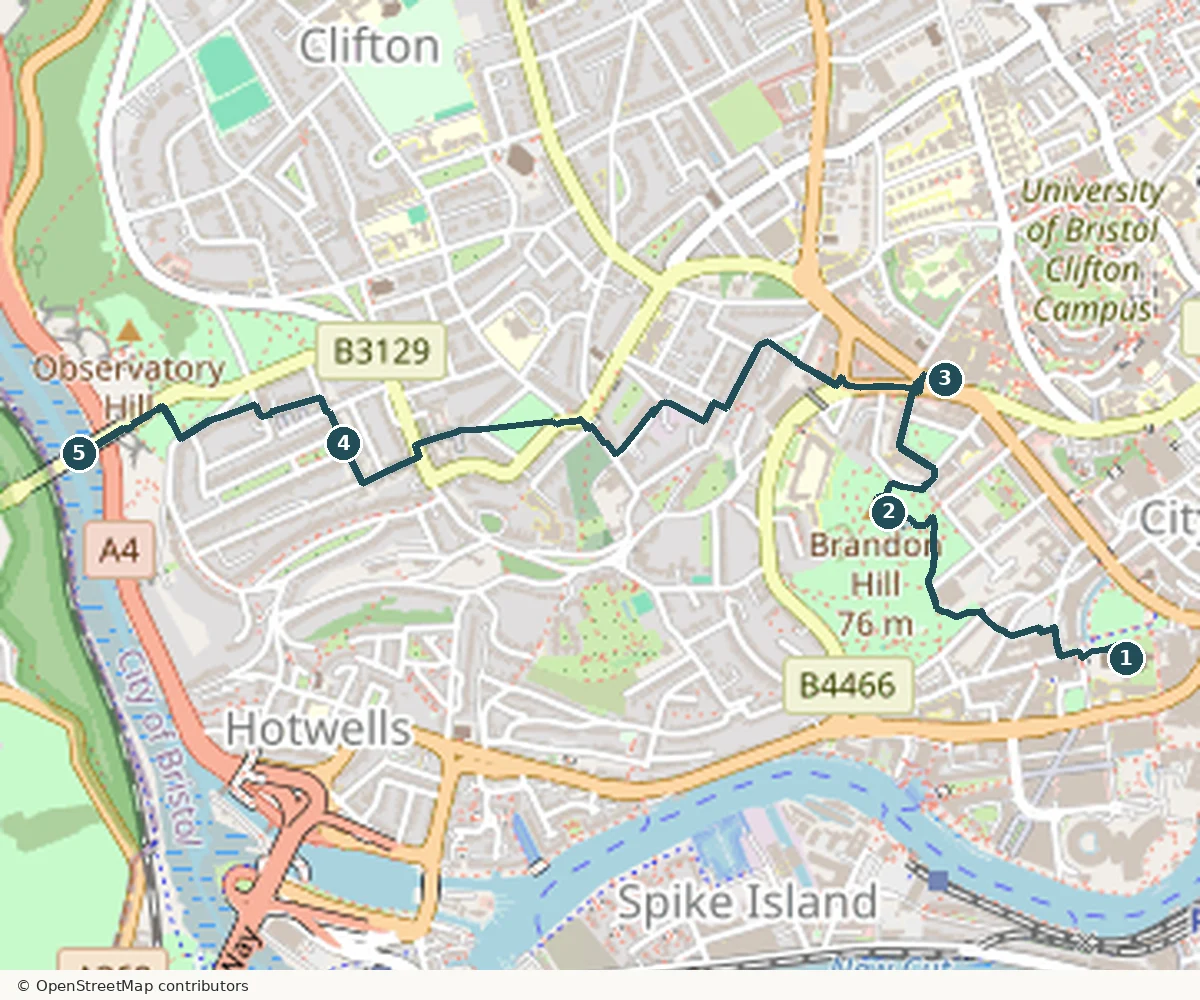
- Bristol Cathedral
- Cabot Tower · Brandon Hill
- Bristol Museum & Art Gallery
- Clifton Village
- Clifton Suspension Bridge
© OpenStreetMap contributors
Stops along the walk
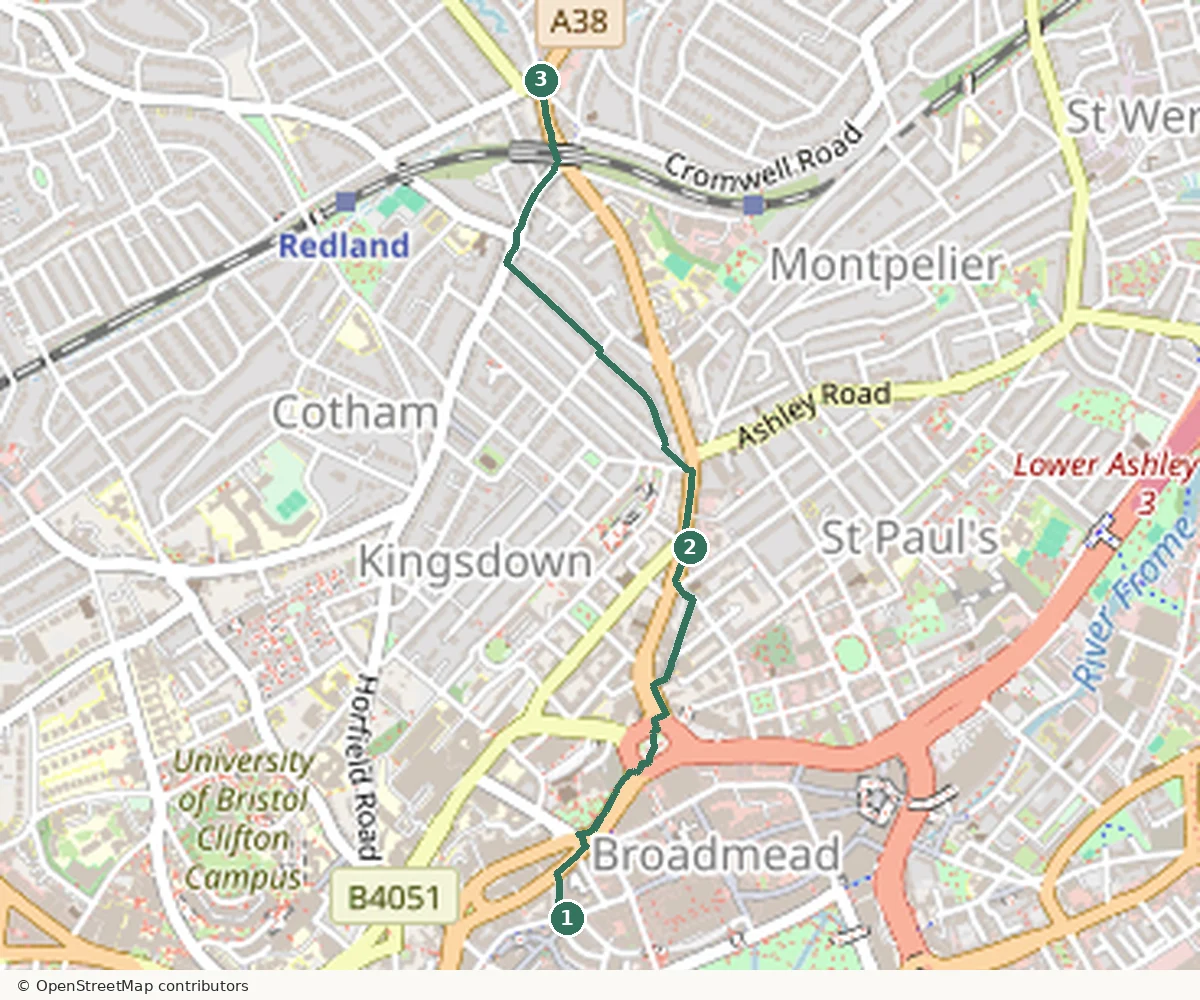
- Nelson Street
- Stokes Croft · The Mild Mild West
- Start of Gloucester Road
© OpenStreetMap contributors