
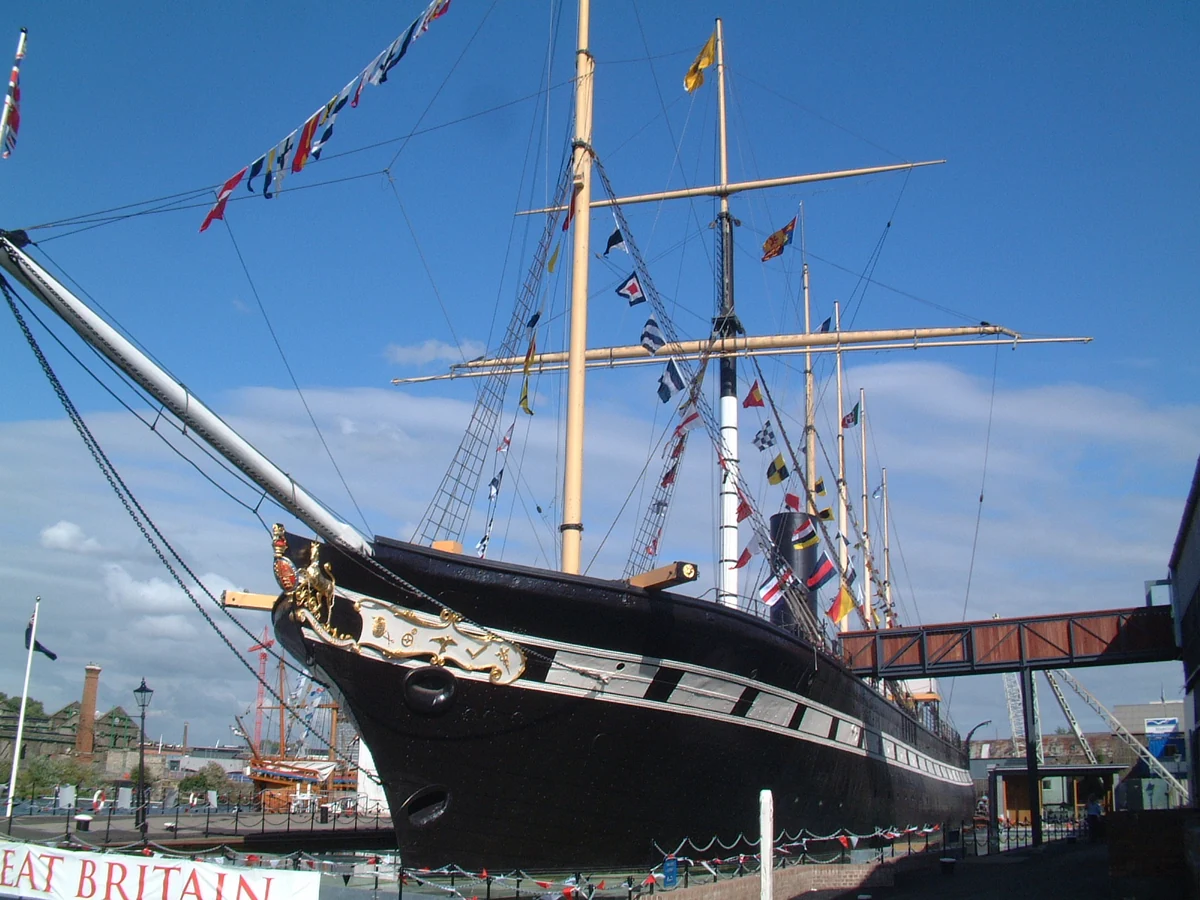
My advice: give around three hours to SS Great Britain and the Bristol Dockyards spaces. It is the major paid attraction to prioritise if maritime history appeals. Adult tickets cost £22.00 ≈ €26.28 online; they include the ship, included museums and return visits for a year under the ticket conditions.
The ship, its hull and those who travelled aboard
SS Great Britain was launched in Bristol in 1843. Brunel combined an iron hull with screw propulsion: the ship tells of a time when technology transformed long-distance voyages. But you do not need 19th-century engineering knowledge to enjoy the visit. Passenger spaces, equipment and hull dimensions already convey the conditions of travel.
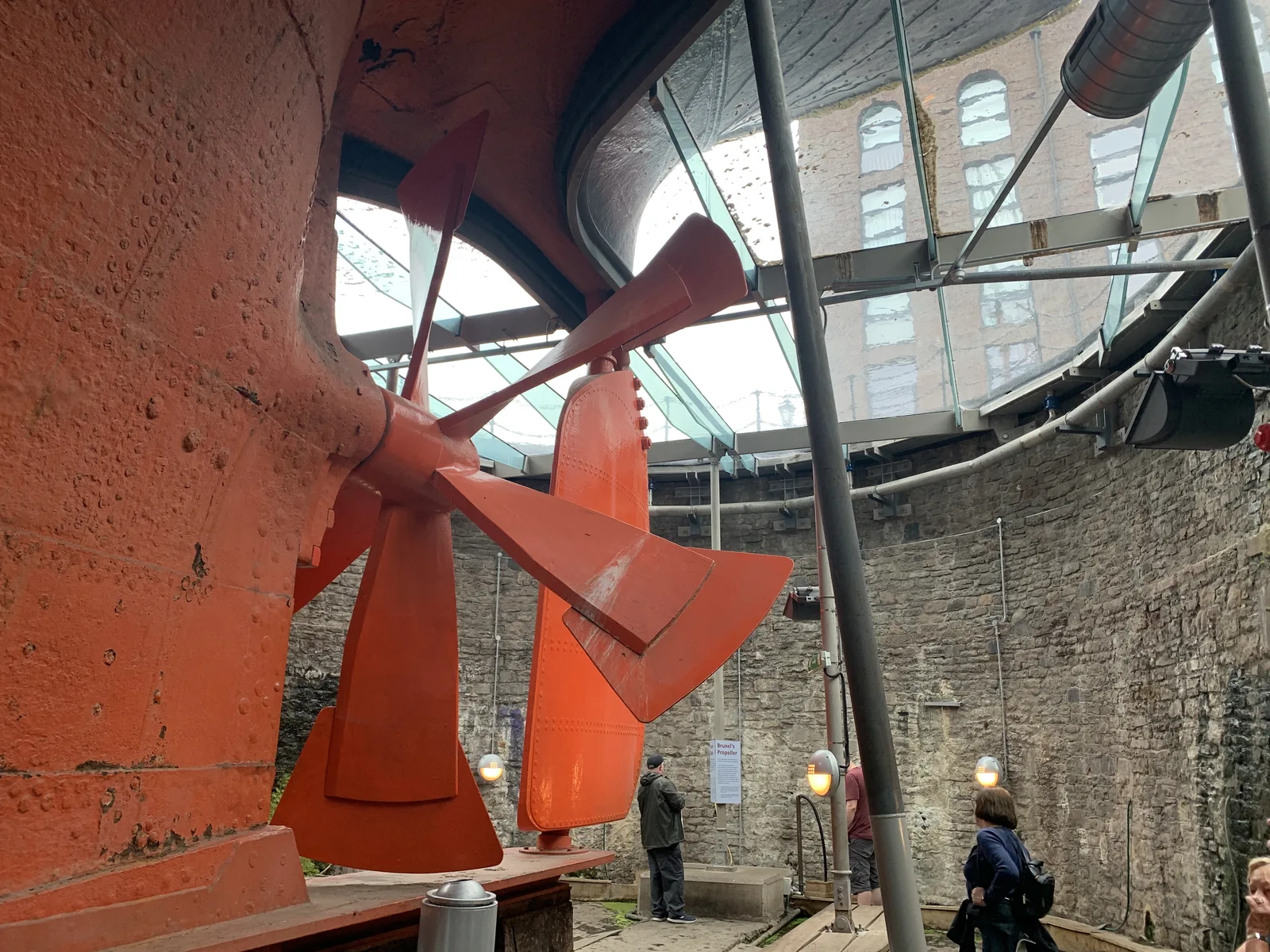
The route passes beneath the glass ‘sea’ surrounding the ship. In the dry dock, you see the hull and propeller from a perspective impossible on a floating vessel. Do not rush this part before boarding: it explains the ship’s shape much better than a photograph from the quay.
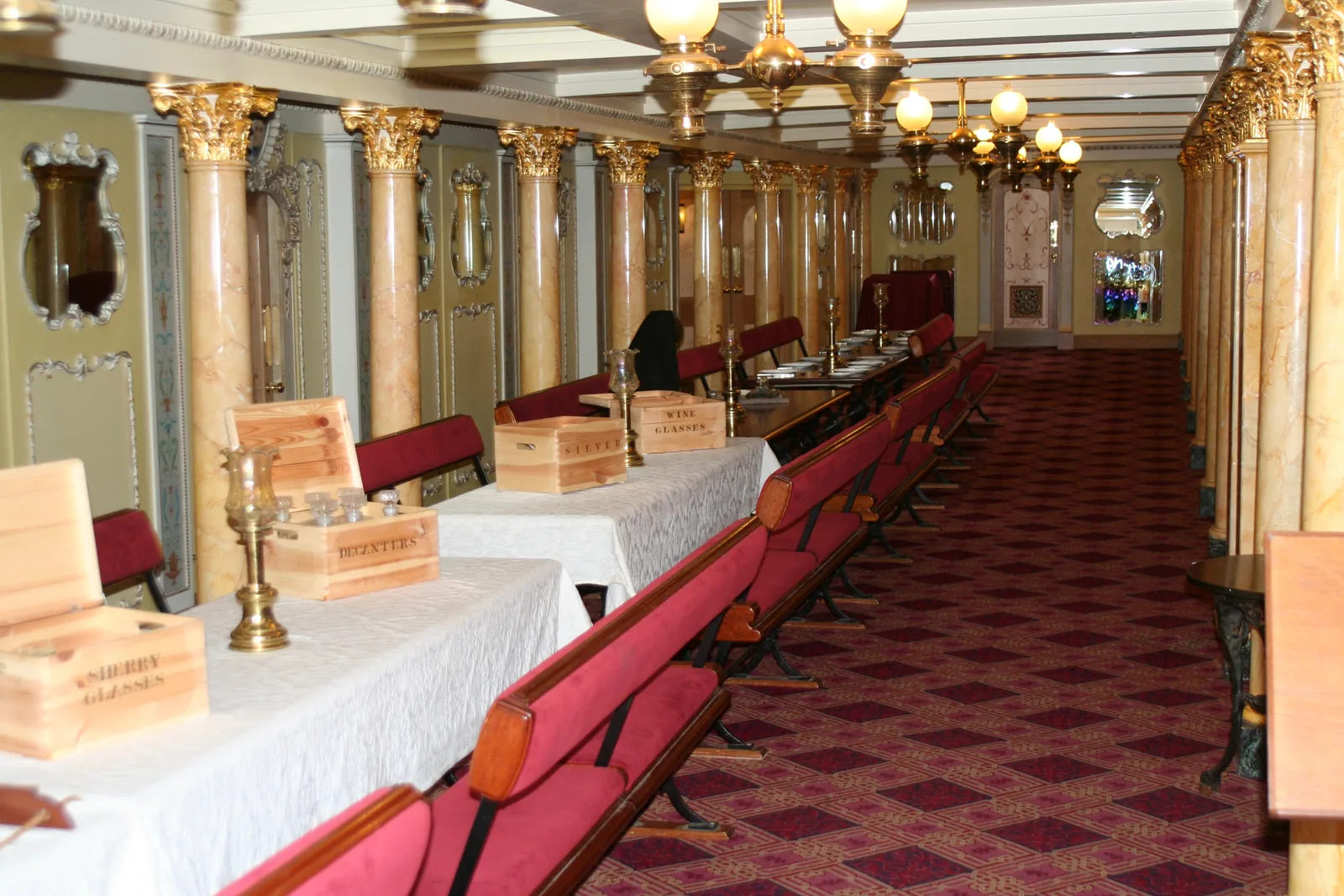
Inside, cabins and recreated spaces convey travellers’ lives. Passages narrow, heights change, and sounds and some smells form part of the presentation. Compare arrangements rather than treating rooms as a succession of sets. Children can look for what they would have missed on a long crossing; adults find food for thought on comfort and social differences.
SS Great Britain and Bristol Dockyards: one ticket, several spaces
Bristol Dockyards is the name of the complex housing SS Great Britain. You will encounter both names when planning. The ship remains the heart of the visit; Being Brunel and the old docks broaden it to its designer and shipbuilding.
Being Brunel explores the engineer’s projects and personality. Objects, documents and staged spaces complement what you have just seen on the ship. The Dock Office, incorporated into the museum, places this work in its original setting. If Clifton’s bridge is also in your plans, the visits echo each other: Brunel appears through two very different works.
Around the ship, cranes, quays and harbour installations extend your discovery of the docks. Albion Dockyard remains a workplace, without a guarantee of seeing a particular activity during your visit. The Brunel Institute preserves archives: it is not an extra space freely entered at any time.
How long should you allow?
| Available time | Suggested plan |
|---|---|
| Around 2 hours | Prioritise the dry dock and ship, with a selection of other spaces. |
| Around 3 hours | The ship, its hull and Being Brunel, with time to read and take a break. |
| A substantial half-day | The full route at a relaxed pace, the docks and a break on site. |
For a first visit, I recommend three hours, adapted to your pace. Entering at the very end of the afternoon forces quick choices, especially in winter when the site closes at 4pm. If your day starts in the Old City, have lunch before visiting: you can then stay aboard as long as curiosity demands.
SS Great Britain prices and tickets
| Ticket | Online | On arrival |
|---|---|---|
| Adult, general rate from age 17 | £22.00 ≈ €26.28 | £25.00 ≈ €29.86 |
| Child aged 4–16 | £14.50 ≈ €17.32 | £16.50 ≈ €19.71 |
| Young person aged 17–24 or student with proof of status | £18.50 ≈ €22.10 | £21.00 ≈ €25.08 |
| Under 4 | Free | Free |
| Afternoon Saver, entry from 2.30pm | £13.00 ≈ €15.53 | £15.00 ≈ €17.92 |
General admission includes returns for twelve months under its conditions; Afternoon Saver is a day-only ticket. For a single visit, the price is appealing, but remaining time depends on season. With a 4pm closure, you have only an hour and a half: short for the whole site. With a 5pm closure, it leaves more leeway.
Family tickets are also offered, including two adults and two children at £64.00 ≈ €76.44 online. Tickets are named and non-transferable; refund and return conditions appear before purchase. An essential companion of a disabled visitor may receive the site’s free admission.
Opening hours and best time of day
The site usually opens Tuesday to Sunday from 10am. It closes at 5pm from 14 February to 2 November and 4pm from 3 November to 13 February. During school holidays announced by the site, opening may be daily. Evening events have their own tickets and times.
For a full visit, I suggest arriving around 1pm after lunch when the site closes at 5pm. In winter, visit earlier or begin with the ship in the morning. On Mondays, the quayside walk remains pleasant, but does not replace museum admission when closed.
Reaching the ship from the centre
The entrance is at Great Western Dockyard, Gas Ferry Road, on Spike Island. From M Shed and Wapping Wharf, the walk follows the quays westwards: this is the sequence in our first day in Bristol. From the opposite bank, the ship may look close, but you must use bridges and public access routes to reach it.
For a start from your hotel, the Bristol map shows the entrance and other nearby attractions. By car, Maritime Heritage Centre car park is next door, but central Bristol has traffic restrictions and a Clean Air Zone: for a short stay, walking or public transport is simpler.
With families and particular access needs
Sleeping arrangements, meals, machinery and movement aboard offer plenty to discuss with children. Under-14s must be accompanied. For toddlers, dark or narrow places and mannequins can be daunting; the sensory guide and site map help identify these spaces beforehand.
Lifts serve the ship, dry dock and museums, but some cabins and historic parts remain narrow. Cobbles and uneven surfaces also occur on the docks. A suitable route therefore depends on your needs; the official accessibility page shows routes and facilities. Go Aloft rigging climbs are separate, seasonal activities with their own conditions: they are not automatically included in general admission.
What should you do before or afterwards?
Staying on the quays is most pleasant. M Shed introduces city history, Wapping Wharf offers lunch, then the ship fills the afternoon. If you like reading every label, spread the two museums over two visits; there is no need to see both on the same day.
For a lighter end to the day, return to the centre along the water. Our Harbourside and Wapping Wharf guide gathers the walk’s landmarks. Do not add Clifton to this afternoon: the gorge and bridge deserve their own walk.