
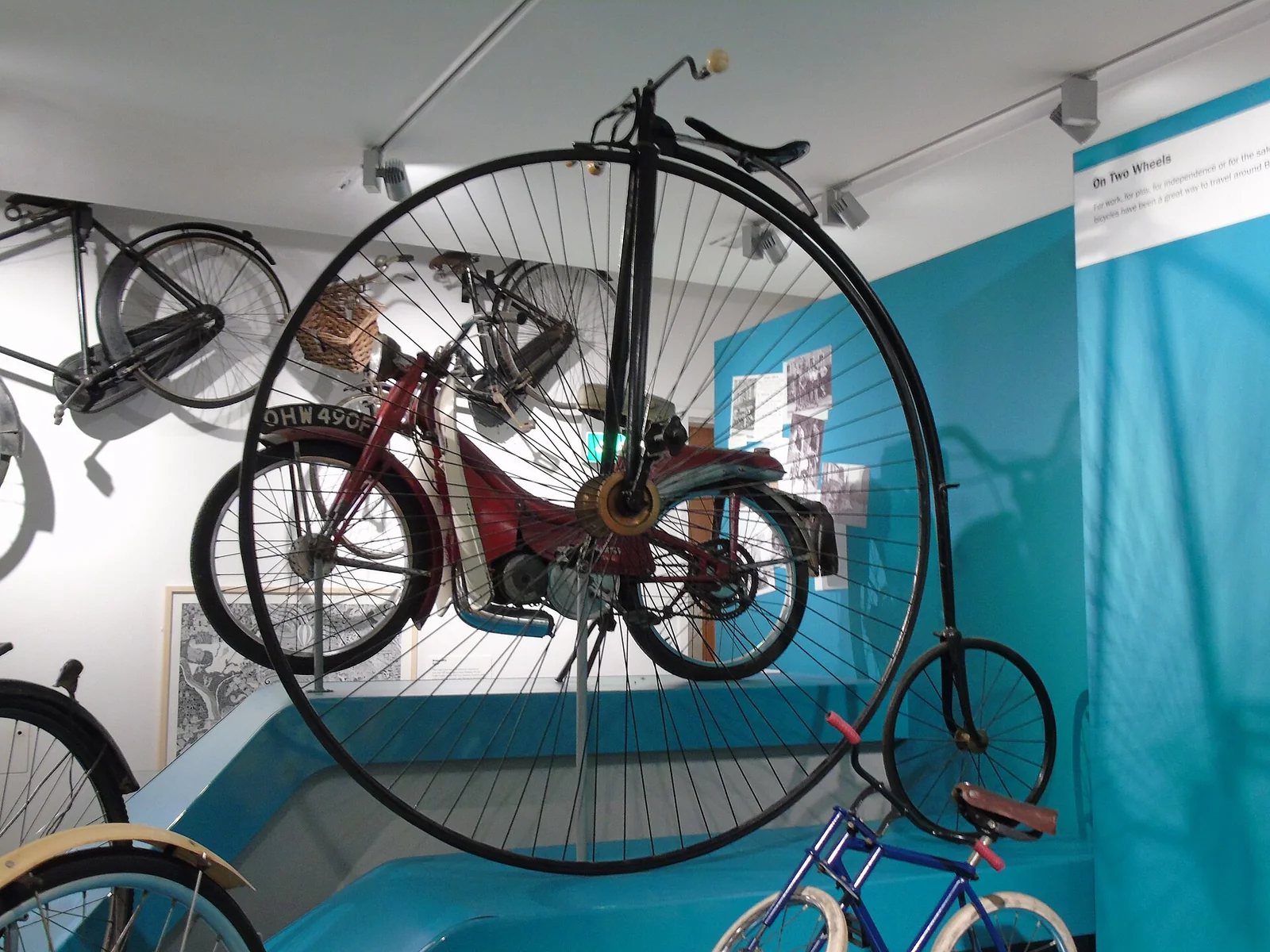
Allow an hour to an hour and a half for a first visit. Admission to the permanent collections is free; the museum usually opens Tuesday to Sunday, 10am to 5pm. Its quayside location makes it easy to combine with the Old City, Wapping Wharf and SS Great Britain.
The museum that gives meaning to your walk
A harbour, neighbourhoods, trade, migration, conflicts and celebrations: Bristol cannot be contained in a single image of the suspension bridge. M Shed brings these threads together in a former waterside shed. The galleries do more than help you recognise monuments; they explain the lives and activities that transformed the city.
For a short stay, I recommend prioritising M Shed among history museums. It lies on the harbourside walk, avoiding a special journey. As the collections are free, choose those that interest you and allow an hour before continuing the walk. If you enjoy cities’ stories, set aside two hours to linger over personal accounts.
Three galleries to choose your route
Bristol Places: reading the city
In Bristol Places, follow the transformation of locations. Transport, housing, work and traces of local discoveries connect history with streets walked today. You encounter vehicles, neighbourhood stories and Thecodontosaurus, the dinosaur associated with Bristol.
Early in your stay, identify a neighbourhood you have crossed or activity observed near the harbour, then look at what has changed. With children, objects and transport offer a more immediate starting point than a long chronology. Entry inside displayed vehicles is not always possible: the bus has notably undergone conservation work.
Bristol People: trade, creativity and protest
The Bristol People gallery explores residents’ activities and commitments. Trade history and international links sit alongside cultural creativity, demonstrations and rights struggles. These are essential themes in a city whose façades and wealth also reflect exchanges with other continents.
Bristol’s involvement in the transatlantic trafficking of enslaved Africans is addressed here. The statue of slave trader Edward Colston, toppled in 2020, is displayed with explanations of the protest and debates. Do not stop at the statue: also give time to other stories and documents that help explain the episode.
Bristol Life: everyday lives
The third gallery follows residents’ experiences: family, leisure, neighbours, settling in the city or leaving it. These more ordinary stories complement major events. After maritime exchanges and campaigns, this gallery returns you to everyday people and neighbourhoods.
Near Bristol Life, the museum displays Banksy’s Grim Reaper. This stop complements a trip focused on Bristol street art, with a work preserved in a museum rather than a wall to find outdoors. For other works, our guide distinguishes current presence from historical locations.
Which route if time is short?
| What you want to do | Your visit |
|---|---|
| Understanding the streets and harbour | Bristol Places, followed by a walk past the cranes. |
| Social history and city debates | Bristol People, with time to read documents and personal accounts. |
| Banksy and everyday life | Bristol Life and Grim Reaper, then the quays. |
| A general first visit | A selection from all three galleries, without trying to read every panel. |
I recommend a late-morning visit if SS Great Britain fills your afternoon. Arriving at opening gives more freedom to explore in depth. If you enjoy reading personal accounts, shorten another visit rather than rush through the galleries.
Outside, the museum extends onto the quays
Cranes and installations outside M Shed recall the function of this harbour edge. Observe them on a walk even when galleries are closed. Boat trips, trains, crane tours and other demonstrations follow the museum’s announced programme, however: do not expect equipment to operate continuously.
L Shed, next to the museum, houses stores explored on scheduled tours. It is not a gallery you can freely enter between stops. If industrial history fascinates you, check tour dates before planning the day; for a general first visit, there is already plenty in M Shed’s collections and on the quays.
Admission and opening hours
M Shed normally opens Tuesday to Sunday, 10am to 5pm. It closes on Mondays, with published exceptions on certain dates. The permanent collections are free and donations are welcome. Special exhibitions and activities may require booking and have their own price.
Individual visitors can enter without booking; groups of ten or more must arrange their visit with the museum. The official M Shed programme distinguishes galleries, exhibitions and quayside activities.
How do you get to M Shed?
The museum is on Princes Wharf, on the Wapping Wharf side. From the Old City, Queen Square and Prince Street Bridge lead to the area on foot. Our first day in Bristol links these stops in a simple order before continuing to Brunel’s ship.
From city centre restaurants, crossing the harbour is therefore part of the walk. The Bristol map shows the museum and useful bridges; for lunch, Wapping Wharf is just behind. The Harbourside and Wapping Wharf guide helps extend the walk without repeated return journeys.
Easy gallery access, separate outdoor activities
Museum and café entrances are level. Accessible lifts serve galleries and adapted toilets are available on the floors. The museum also offers wheelchairs and folding seats; a sensory map helps identify visiting environments.
Historic boats have different access conditions from the building. Even if galleries are wheelchair accessible, not all quayside activities necessarily are. The official access guide details these differences.
M Shed or Bristol Museum?
To understand Bristol, choose M Shed. For art collections, Egypt and geology, choose Bristol Museum & Art Gallery. The first fits the harbour loop; the second suits the day climbing towards Clifton. You can visit both during a three-day stay by selecting a few rooms in each.
In rainy weather, M Shed easily replaces part of an outdoor walk. Its appeal goes beyond simple shelter, however: when you leave, the quays and streets already tell richer stories.