
For a first stay, start with the two banks of the Floating Harbour. The Old City is north-east of the harbour; Harbourside spreads around the water; Clifton climbs towards the Avon Gorge to the west. Stokes Croft and Gloucester Road take you north. Southville and Bedminster lie south, across the river.
Boundaries between these areas are less distinct on the ground than on a map. Keep the names as walking pointers. To choose a hotel location, see the comparison of areas to stay, which accounts for arrival, evenings and journeys.
Which neighbourhood should you choose for your day?
| Area | What you will find | Time to spend there | Combine with |
|---|---|---|---|
| Old City | Covered market, Corn Street, King Street and Queen Square | A morning, including lunch | Harbourside |
| Harbourside and Wapping Wharf | Quays, major museums, Brunel’s ship and waterside breaks | Half a day to a full day, depending on visits | Old City |
| Clifton | Stone houses, small shops, suspension bridge and gorge | Half a day | Park Street and Bristol Museum |
| Stokes Croft and Gloucester Road | Street art, cafés, record shops and independent businesses | Half a day | Nelson Street and Christmas Steps |
| Southville and Bedminster | North Street, painted walls, market and theatre | Half a day | Wapping Wharf, if extending the walk |
These timings assume a walk with a few stops. A long SS Great Britain visit or a We The Curious session easily turns a harbourside half-day into a full day.
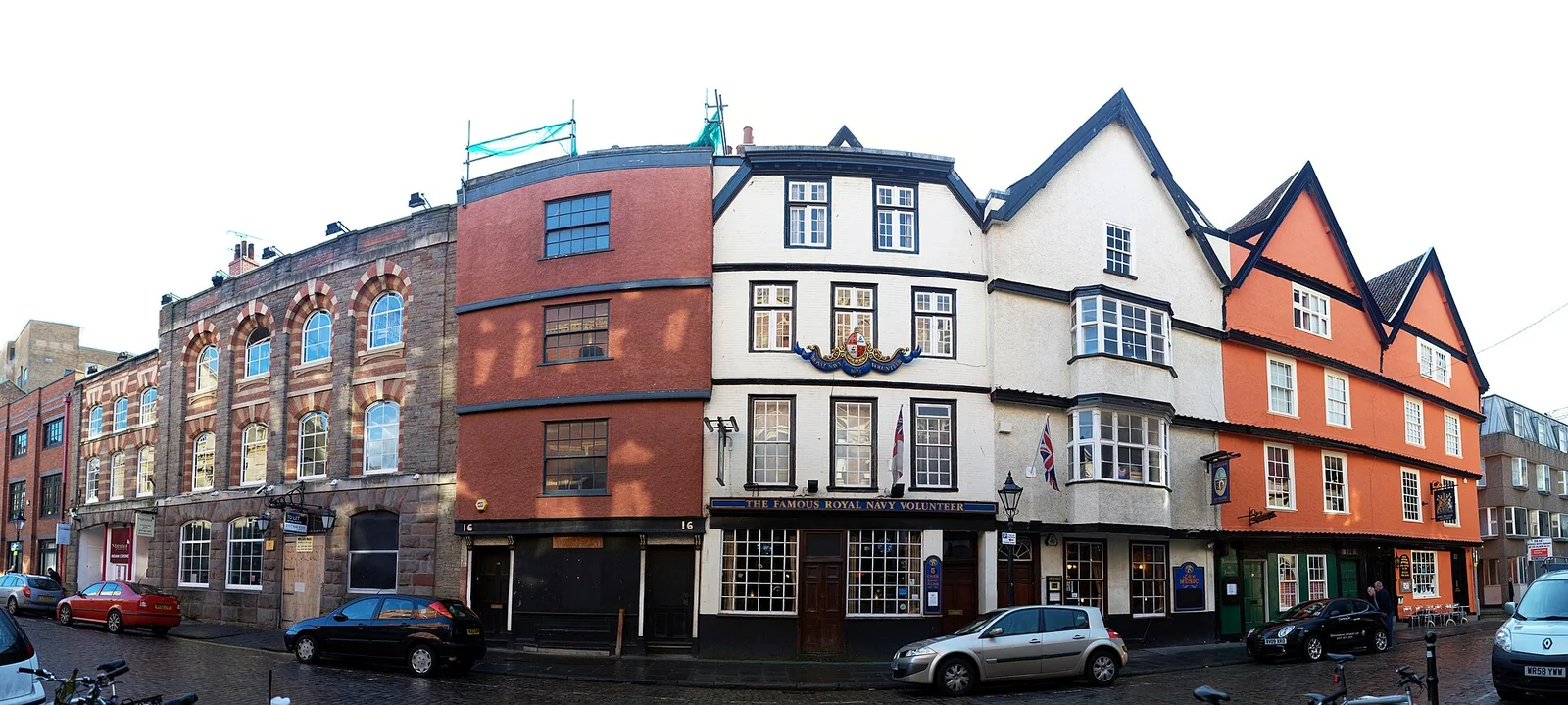
Old City: the best introduction
Corn Street and St Nicholas Market’s passages make a good starting point. Move from grand commercial façades to an aisle of small food counters, then streets descending towards King Street. The contrast lies within a fairly small area: no need to spend the morning on transport.
The covered market usually opens Monday to Saturday, 9.30am to 5pm. Come before or during lunch to enjoy food stalls too. On Sundays, you can still discover street architecture, but the market is closed: the atmosphere and eating options are different.
Continuing through King Street and Queen Square naturally brings you to the quays. It is the simplest sequence for a first day. The Old City route details streets, detours and breaks.
Harbourside: Bristol around the water
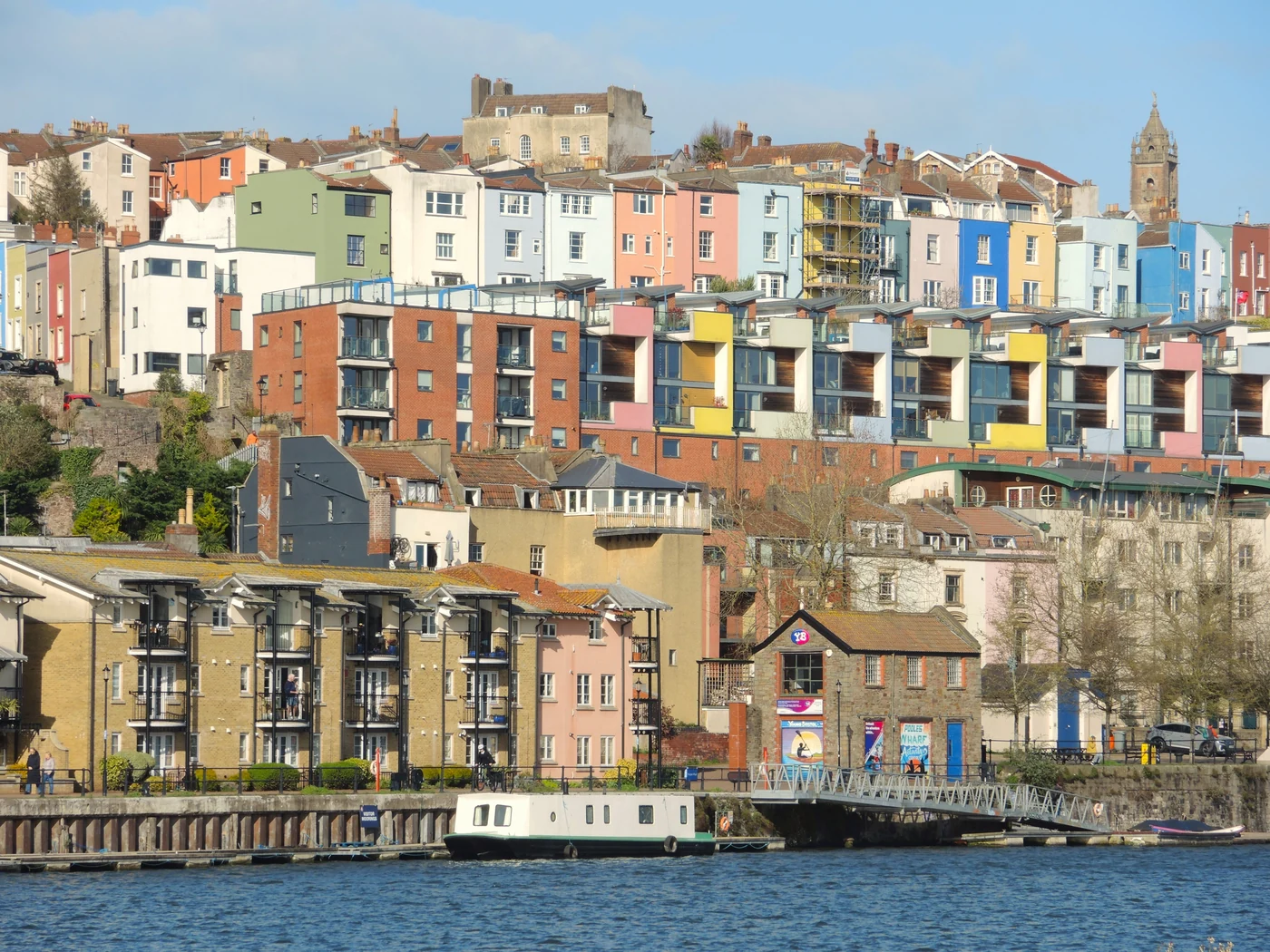
Harbourside describes a large area, not one square. Narrow Quay, Millennium Square, M Shed’s surroundings and the quays to SS Great Britain offer different walks. Bridges are the points to locate on the map: seeing somewhere across the water does not mean you can head straight to it.
Alternate a quayside walk with an indoor visit. M Shed tells Bristol’s story; SS Great Britain tells Brunel’s and sea voyages’. Between them, have lunch at Wapping Wharf. Not all these visits are paid: the harbourside and Wapping Wharf guide helps you choose and organise the day.
Clifton: half a day on the hills
Clifton Village is the area of pale façades, small shopping streets and grand curving terraces. The bridge is its culmination, but the walk benefits from first passing The Mall, Clifton Arcade or Royal York Crescent. This way, you discover a neighbourhood before its best-known view.
The climb from the centre is noticeable, especially after a day on the quays. Reach the neighbourhood by bus and walk back, or cross Park Street and the museum surroundings before continuing to Clifton. Our Clifton walk helps link these stops without repeated return trips.
If passing Brandon Hill, the park remains a possible stop. Cabot Tower is temporarily closed for maintenance: plan a park walk without climbing the tower.
Stokes Croft and Gloucester Road: shops and painted walls
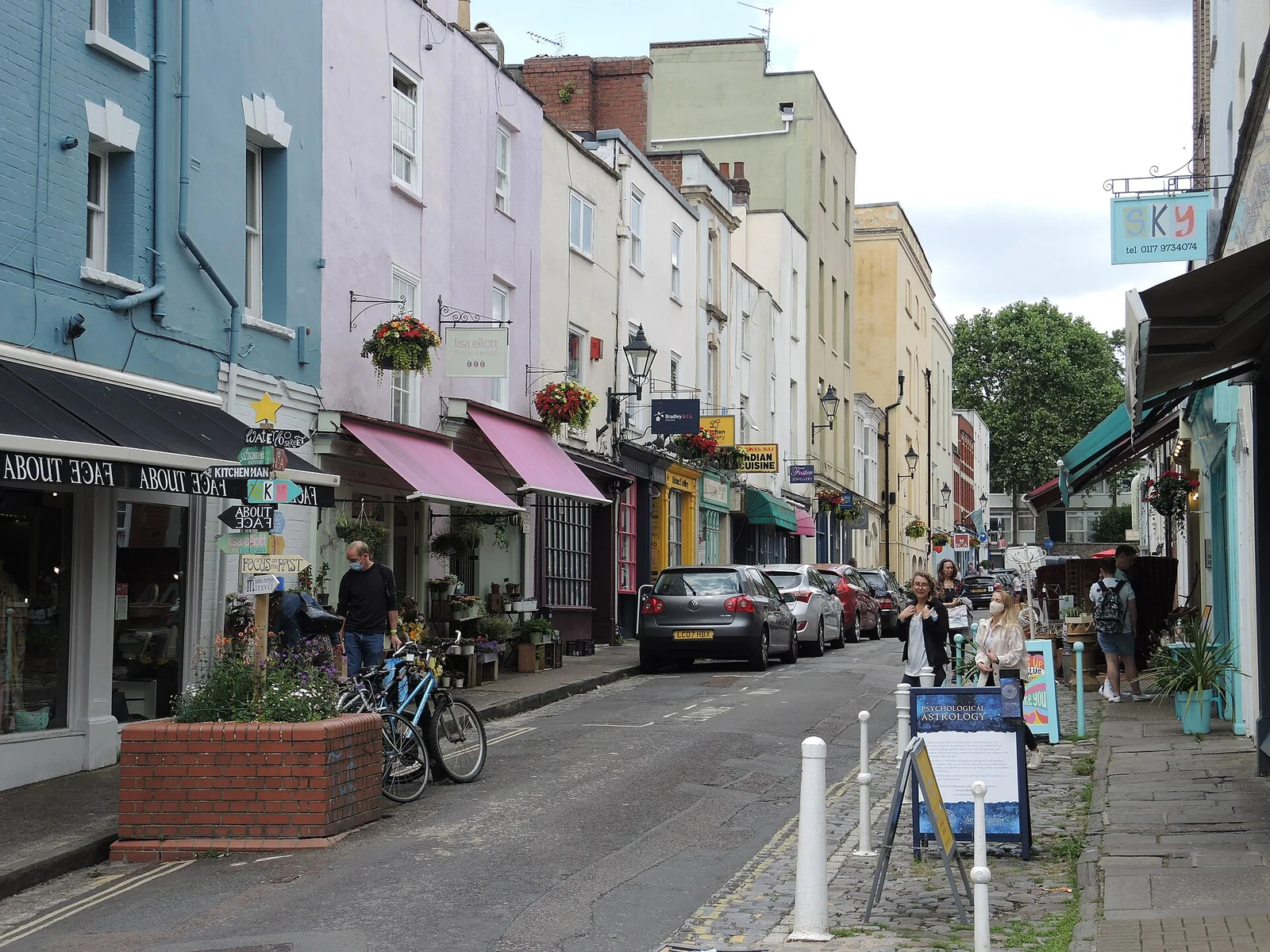
North of the centre, Stokes Croft’s murals sit alongside cafés, shopfronts and music venues. Gloucester Road extends the walk among independent shops. The pleasure also comes from unplanned stops at a bookshop or record shop.
Gloucester Road continues a long way: choose the section to explore rather than treating it as a small detour. The Stokes Croft and Gloucester Road route specifies where the suggested walk ends. To follow artworks, also use the Banksy and street art guide: walls can be repainted and not all historical works remain visible.
Southville and Bedminster: across the river
North Street brings together cafés, shops and murals. At the end of the walk, Tobacco Factory adds another reason to come: café, theatre or market, depending on the day. This area suits a three- or four-day stay better than a rushed visit between two major landmarks.
You can link this area with Wapping Wharf on foot, but it substantially extends the walk. If you have already walked a lot in Clifton, give southern Bristol half a day rather than crossing the whole city again.
How should you combine these neighbourhoods over two or three days?
Over two days, combine Old City and Harbourside on day one, then Clifton on day two, with Bristol Museum if it appeals. This leaves evenings in the centre and shows Bristol’s main contrasts without rushing to every neighbourhood.
Over three days, add Stokes Croft and a section of Gloucester Road. North Street can complete the day for street art enthusiasts, provided you accept more walking and shorten northern stops. The three-day itinerary shows this arrangement and its alternatives.
Finding your way: use the Bristol map before choosing the order of visits. Time needed depends more on museums and breaks than on the number of neighbourhoods crossed.